

Can you trust what you see online anymore? This guide breaks down what a deepfake is in plain terms and sets expectations for an ultimate guide that covers creation, types, real-world risks, and defenses.
Modern tools let anyone create convincing synthetic media. Advances in artificial intelligence, like generative models, make it easier to produce altered video, audio, and images. That shift matters because media verification is now part of everyday information habits.
This article previews the main categories—video, audio, and images—and explains common online uses, from hoaxes to fraud and harassment. It keeps a friendly, practical tone so you don’t need a computer science background.
What this guide is—and isn’t: it summarizes laws, platform policies, and best practices but does not provide legal advice. You’ll get actionable takeaways on how to spot a deepfake, how detection tools work, and what to do if someone targets you or your organization.
Key Takeaways
- Understand what synthetic media is and why it matters now.
- Learn simple signs to spot manipulated content.
- See how detection tools and verification help limit harm.
- Know common risks like fraud, hoaxes, and abuse.
- Find practical steps to protect yourself and your organization.
What Deepfakes Are and Why They Matter Right Now
Synthetic media now includes AI-edited or AI-generated images, videos, and audio that mimic real people. These creations often rely on neural networks like autoencoders and GANs. They go beyond old-school editing by producing new, lifelike content instead of simple cuts or context shifts.
How this differs from traditional edits:
- Traditional editing: trimming, splicing, or color fixes.
- Shallowfakes: out-of-context clips or basic edits that mislead.
- AI-made media: realistic face swaps, facial reenactment, and voice cloning driven by deep learning.
The rise of deepfakes and deepfake technology matters because credibility cues—familiar faces, trusted voices, viral reach—can short-circuit skepticism. A single convincing clip can spread fast, shaping beliefs before verification.
Realism varies. Some creations are easy to spot. Others fool casual viewers and require provenance checks. That gap creates a core trust challenge: when audio and video can be fabricated, proof needs source checks, context, and technical detection.
| Aspect | Traditional | AI-made |
|---|---|---|
| Creation method | Manual editing | Neural networks / learning models |
| Typical use | Cutting, color, captions | Face swaps, voice cloning, reenactment |
| Risk to people | Low-to-moderate | High (misinfo, reputational harm) |
| Detection need | Simple checks | Source, provenance, and technical tools |
This guide will next cover technology basics, the threat landscape, detection methods, and practical workflows to protect people and organizations from misleading information.
A Quick History of Deepfake Technology
The story of manipulated images and video spans centuries, but recent AI breakthroughs sped that history into a new era.
Photo manipulation dates back to the 19th century. Early retouching and montage set the stage for later digital editing.
In 1997, the automated facial reanimation system called “Video Rewrite” showed how a computer could change mouth motion to match new audio. This was an important academic milestone.
Why GANs mattered
By the mid-2010s, generative adversarial networks transformed visual realism. The generator-discriminator training loop produced sharper, more convincing faces.
GANs lowered the barrier to realistic results, making sophisticated outputs possible with less manual work and more data.
From labs to public tools
The term “deepfake” emerged in 2017 on Reddit as user communities shared how-to workflows. Open-source programs like FaceSwap and DeepFaceLab followed.
These programs and tutorials spread techniques beyond research labs. That accessibility accelerated experimentation and public awareness.
| Time | Milestone | Impact |
|---|---|---|
| 19th century | Photo retouching | Early visual editing norms |
| 1997 | Video Rewrite | Automated facial reenactment research |
| mid-2010s | GAN breakthroughs | Higher realism, lower entry cost |
| 2017 | Reddit “deepfakes” | Wide sharing, open-source tools |
A notable example was public campaigns by researchers and media outlets that used altered clips to raise awareness about misinformation. Over time, better models + more data + more compute drive stronger results.
How Deepfakes Are Made
At the core of most synthetic face work is a simple pipeline: capture, train, and render. That high-level view helps you see where flaws appear and what detection clues to look for.
Conceptual pipeline:
- Collect clean footage or images of the target.
- Preprocess frames and align faces for training.
- Train models, then generate and refine output.
Autoencoders, face swapping, and reenactment
Autoencoders learn to compress a face into a compact code and then reconstruct it. Swap happens when one encoder feeds a different decoder, so the same expression rebuilds as another identity.
This method powers many face-swap workflows for images and videos. It explains why you sometimes see mismatched expressions or identity leakage when models don’t generalize well.
Generative adversarial networks
A GAN adds a realism feedback loop: a generator makes samples while a discriminator learns to tell real from fake. As they train, outputs gain sharper detail and fewer obvious artifacts.
GANs improve texture and lighting, but they need more data and training time to reach high quality.
Quality factors and common failure modes
More varied data, longer training time, and a stronger model usually raise realism. But practical issues remain: occlusions (hands, glasses), temporal flicker between frames, and odd facial micro-expressions.
These patterns and subtle artifacts are useful detection signals. Tools evolve fast, so focus on the mechanics and predictable failure points, not a single software method.
Types of Deepfakes You’ll See Online
Synthetic media online appears in three main forms: moving video, cloned audio, and AI-created images. Each type lands in timelines and chats in different ways, and each carries unique clues you can learn to spot.
Deepfake videos and face replacement
Face replacement swaps one person’s face onto another performer or reenacts expressions to match new audio. These deepfake videos range from obvious mismatches to highly polished clips that need close inspection.
Audio cloning and voice imitation
Audio fakes can be made from very short samples. A clip from a podcast, TikTok, or voicemail may let systems mimic a person’s tone and cadence.
Quick tells include odd phrasing, unnatural pauses, or robotic breaths that don’t match the speaker’s usual style.
AI-generated images and synthetic identities
Generative models can create realistic profile photos and whole fake personas. These images may appear in comments, dating apps, or dodgy accounts used for scams.
- Common locations: feeds, group chats, and recommendation lists.
- What to look for: lip-sync or lighting mismatches in video, strange phrasing in audio, and uncanny details in images.
- Context matters: the same content can be satire, creative work, or a scam.
Distribution note: once created, these items spread fast via reposts and algorithms. That speed is why quick source checks and basic skepticism help more than ever.
Where Deepfakes Show Up in Social Media and News Feeds
Social platforms concentrate moments that can make altered media feel like breaking news. That mix of speed, emotion, and visible engagement helps manipulated clips spread into many timelines and chats.
How viral sharing amplifies belief
Ahmed et al. (2024) found that social media news use increases illusory truth effects: repeated exposure makes claims seem more believable. When the same clip appears across threads and reposts, people begin to accept it as fact.
Why emotion and negativity drive resharing
Algorithms favor content that sparks strong reactions. Outrage, fear, and surprise push posts into more feeds because people comment and share quickly.
- Common places: short-form video apps, X-style resharing, Facebook groups, YouTube clips, and private messaging chains.
- Social proof—likes, comments, and shares—can make misinformation feel verified even without a credible source.
- Typical scenarios: a “breaking” clip, an edited hot-mic moment, or a leaked call paired with a dramatic caption.
Quick rule: pause before you reshare. Check the source, look for context, and verify with trusted outlets when a post seems designed to provoke.
Not all altered content is harmful. Some is labeled parody, creative work, or educational, and proper disclosure matters.
Deepfakes Used for Harmless and Helpful Purposes
When used openly, AI-generated likenesses can help storytellers, teachers, and editors achieve new creative goals. Clear disclosure and consent are central to acceptable use.
Parody and satire: Labeled comedic clips and political commentary let creators critique public life without deceiving viewers. These short videos work best when the intent is obvious and the account is transparent.
Historical recreations and education: Animating archival photos or reenacting speeches can bring lessons to life. For example, restoring an old interview or illustrating how manipulation works builds media literacy.
Entertainment and production: Studios use face-swapping for de-aging, digital doubles, and VFX workflows. Iterative training stabilizes results and cuts reshoots, making production more efficient.
- Acceptable-use principles: disclosure, consent, and no intent to mislead.
- Useful work: localization, training videos, and safe creative experiments when labeled.
- Governance note: permissions, contracts, and clear “synthetic” labels prevent confusion.
These helpful applications contrast with harms that follow. The next sections examine fraud, disinformation, and reputational risk so readers can weigh benefits against dangers.
Deepfake Threats: Disinformation, Misinformation, and the “Liar’s Dividend”
When realistic fakes mix with rushed news cycles, voters can be misled before facts emerge. That timing makes synthetic content a potent tool for political manipulation and reputational attacks.
Misinformation is usually unintentional: wrong clips shared without knowing they are altered. Disinformation is deliberate—actors crafting fake statements to change opinions or outcomes.
Political manipulation can take many forms: fabricated candidate statements, staged “leaks,” or synthetic confessions released at critical moments. These clips aim to shape headlines and sway voters quickly.
Schiff, Schiff & Bueno (2024) describe the “liar’s dividend,” where public figures dismiss authentic evidence as fake to avoid accountability. As fakes improve, real footage can be cast into doubt.
Uncertainty itself becomes a weapon. When audiences can’t tell what’s real, many disengage or retreat to partisan sources that confirm preexisting beliefs.
What researchers recommend
- Invest in verification infrastructure and provenance tracking.
- Strengthen platform enforcement around election-period content.
- Raise public literacy so people judge source credibility, corroboration, and technical provenance—not just how convincing a clip looks.
Quick frame for readers: evaluate claims by source credibility, corroboration, and provenance. These habits limit the manipulation threats that move next into fraud and financial harms.
Deepfake Fraud and Scams Targeting People and Businesses
Attackers exploit trust, quick deadlines, and realistic voices to move funds or steal sensitive data. These schemes blend social engineering with synthetic media to pressure staff into bypassing controls.
CEO impersonation is a common method. A fraudster mimics an executive’s audio or sends a stitched clip, then urges urgent payment or confidential action. High-pressure language and secrecy discourage verification.
Banking and identity risk as AI scales
Generative models speed creation of synthetic IDs and cloned audio. Deloitte Insights (2024) warns this raises fraud risk for onboarding and KYC. Banks may see more believable attempts to pass verification checks.
Recognizable patterns defenders should watch
- Unusual payment rails or last-minute wire instructions.
- Requests for secrecy, outside normal approval chains.
- Vendor changes that arrive with urgent, emotional language.
Professional persona scams also appear. The New York Times (2025) describes “AI doctor” pitches where real credentials are used to sell bogus services. Companies and a person can both fall victim because trust is exploited at the human layer.
| Scenario | Common Tell | Risk | Defensive Step |
|---|---|---|---|
| CEO payment request | Urgent, off-channel message | High — funds diverted | Call-back verification to known number |
| Vendor change | Last-minute bank details | Medium — invoice fraud | Dual approval and vendor portal checks |
| Identity verification bypass | High-quality synthetic ID or audio | High — account takeover | Biometric+document cross-check, anomaly flags |
| Professional persona pitch | Persuasive credentials with sales pressure | Medium — fraudulent contracts | Independent credential verification |
Quick takeaway: real incidents (WPP, The Guardian 2024; Accenture reporting in 2025) show the ability of these scams to succeed. Simple playbooks — call-backs, multi-step approvals, and verified vendor records — make it far harder for one message to move money.
Voice Cloning: Why Humans Struggle to Detect Audio Deepfakes
People trust voices the way they trust faces. That trust makes synthetic speech especially persuasive. Research shows listeners often fail to spot high-quality cloned audio, even when they try to be careful.
What studies reveal about our limits
Barrington, Cooper & Farid (2025, Nature) found many people cannot reliably tell a real caller from a sophisticated clone. Seniors and busy listeners are especially vulnerable, according to reporting by The New Yorker and CBC.
Family-emergency scams and common playbooks
- Urgent crisis story: a loved one is hurt or detained.
- Demand for secrecy to prevent questions.
- Request for money transfer or gift cards on short notice.
- High time pressure to avoid verification.
Practical verification habits
Simple checks work: hang up and call back a saved number, ask a prearranged family password, or confirm via text or another app. In business, require written confirmation, a known code word for wire changes, and manager escalation for odd requests.
Remember: sounding emotional is not proof. Scammers use distress to shut down critical thinking. Strong detection relies on process, not just what you hear.
Nonconsensual Deepfakes and Reputation Harm
A single fabricated clip can create a cascade of harassment, job risk, and emotional trauma for the person pictured.
Nonconsensual deepfakes are altered images or videos that use someone’s likeness without consent, often to shame or intimidate. These attacks are uniquely harmful because they combine realistic visuals with viral sharing.
One widely cited figure estimates nonconsensual pornography makes up as much as 96% of reported cases online. Deepfake pornography disproportionately targets women and public figures, who face both public shaming and long-term search-result exposure.
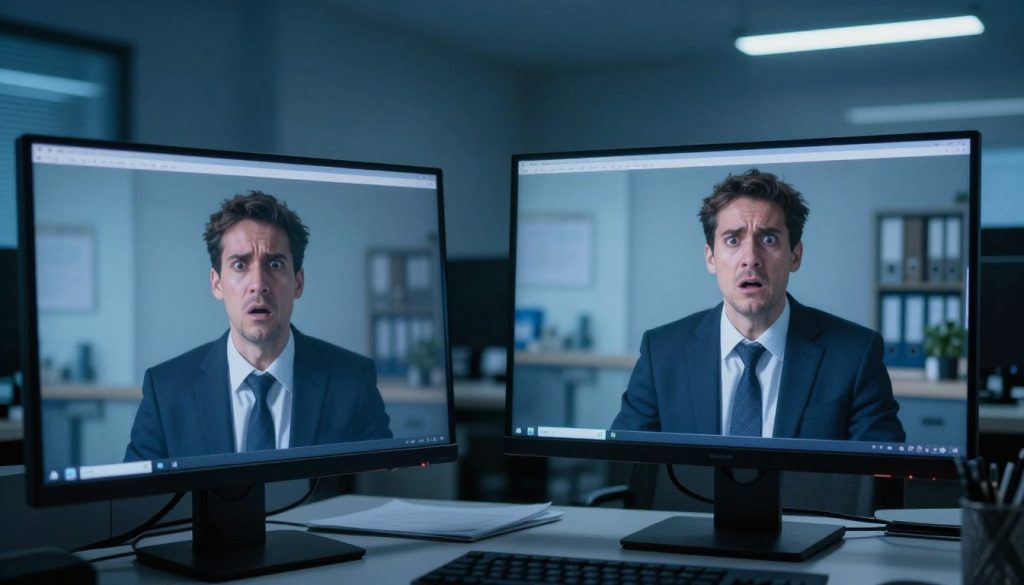
The long tail of damage is real: reuploads, persistent search hits, workplace consequences, and ongoing harassment can follow for years.
- Immediate steps: document URLs, screenshot posts, and preserve metadata.
- Report the content to platforms, request takedowns, and seek legal counsel when appropriate.
- Prevention: reduce high-quality face footage online and tighten privacy settings.
Friends and bystanders help by not resharing, reporting violations, and supporting the targeted person. These social responses reduce reach and cut the power of manipulation.
Next: harms extend beyond reputation into safety and high-stakes decision-making, which we cover in the following section.
Deepfakes in High-Stakes Domains Like Healthcare
Medical imaging systems now face a new kind of manipulation that can alter scans and change treatment decisions.
How manipulated medical images can erode diagnostic trust
Altering a CT scan or X-ray can directly change a clinician’s conclusion. A falsified image may lead to the wrong diagnosis, unnecessary surgery, or missed treatment.
Research shows attackers can inject or remove signs of lung cancer in 3D CT scans in a white-hat hospital test (Waier & Shillair, 2024). Alarmingly, both radiologists and automated models were fooled.
This is different from a viral post: the target is clinical workflow and patient safety, not clicks. Medical records and PACS systems carry regulated data that clinicians rely on every day.
Why this threat demands operational controls
Practical steps reduce risk without causing panic. Secure chain-of-custody for imaging files, stronger audit trails, and hardened PACS access limit tampering opportunities.
- Enforce checksums and provenance metadata on image files.
- Require multi-step verification for any changes to archived scans.
- Combine human review with specialized detection tools tuned for medical formats.
Bottom line: treat imaging integrity as clinical safety. The same spotting mindset—look for anomalies and verify provenance—applies in hospitals just as it does online.
How to Spot a Deepfake in Video, Images, and Audio
A quick, practical checklist helps you spot altered video, image, or audio clips before you take them at face value. No single sign proves manipulation, but combined clues build a reliable case.
Visual tells to watch for
Blinking and eyes: abnormal eye movement or no natural blink patterns. Lip-sync: mismatched mouth motion or odd teeth and tongue details.
Lighting and skin: inconsistent shadows, odd highlights, or facial warping near edges. These artifacts are common patterns in low-quality fakes.
Motion and body inconsistencies
Look for jitter, frozen frames, or a face that drifts off the neck. Hands or objects that “merge” into faces and strange head geometry are classic signs.
Compare face expression to body language. If posture, gait, or gestures don’t match the face, treat the clip with caution.
Context clues and quick checklist
- Who posted it? Check the account age and prior posts.
- Does any reputable outlet corroborate the claim?
- Is the clip the only source for a dramatic claim? That “too perfect” story is suspicious.
- For audio, note unnatural cadence, missing breaths, sudden tone shifts, or audio that sounds overly clean.
- When unsure, verify before sharing: seek original footage, corroboration, or expert analysis.
| Format | Common Tell | What to check |
|---|---|---|
| Video | Bad lip-sync, flicker | Frame-by-frame playback; lighting continuity |
| Images | Blurred edges, mismatched skin tone | Reverse image search; metadata/provenance |
| Audio | Weird cadence, missing breaths | Call-back, ask for a live confirmation |
| Context | Single-source shock claim | Corroborate with trusted outlets and original files |
Example: a viral video with perfect timing and no outside coverage is often a red flag. Strong detection blends visual signals, motion checks, and good source work.
Deepfake Detection Technology and Tools
Modern detection tools combine signal analysis and provenance checks to flag suspicious media quickly. These systems help prioritize what needs human review and further verification.
How detectors spot artifacts and fingerprints
Deepfake detection systems look for software-induced artifacts, statistical inconsistencies, and subtle fingerprints left by generation pipelines.
Typical checks include noise patterns, frame-level timing quirks, and mismatches between audio and mouth motion. Detectors also scan metadata and compression traces to find editing fingerprints.
Why detection is an arms race
As models improve, generators adapt to erase known tells. Once a detection weakness is public, creators often change their training or output steps to reduce that signal.
Result: tools keep improving, but none are foolproof. Use detection to triage risk, not as a single source of truth.
Content authentication, watermarking, and provenance
Mitigations include cryptographic signing at capture, standardized metadata (like C2PA), and visible or invisible watermarks embedded in media.
| Method | What it does | Practical note |
|---|---|---|
| Cryptographic signing | Verifies origin at capture | Strong but needs wide adoption |
| Watermarking | Marks synthetic content | Works if preserved through edits |
| Provenance metadata | Tracks editing steps | Useful for platforms and archives |
Use case guidance: pick tools with low false positives, multi-format support (audio/video/images), and clear privacy policies. Combine automated flags with human review, source checks, and organizational policies. Tools work best when platforms and teams enforce consistent governance.
How Platforms and Organizations Are Responding
A practical defense combines platform policy, company procedures, and employee training to reduce harm from synthetic clips. Platforms and organizations now use a mix of labels, removals, and special election-period rules to limit reach and inform users.
Policy actions on major platforms
Content rules define what is eligible for labeling or removal. Many sites add visible tags, reduce distribution, and apply stricter limits during elections or crises.
Enforcement is hard at scale: volume, cross-posting, and fast resharing often outpace moderation staffing and automated filters.
Workplace playbooks for high-risk requests
Good playbooks lay out clear verification steps for payment requests, vendor changes, HR actions, and executive directives.
- Require two independent confirmations: a second channel plus a known contact method.
- Pause high-risk transfers until audit checks complete.
- Document decisions and escalate unusual requests.
Training, communications, and governance
Employee training teaches ways to spot social engineering and reduces panic clicks. Teams should encourage escalation without fear of “bothering” leadership.
“Act fast, be clear, and pick one official source to correct false content.”
Note: policies vary by jurisdiction, and legal frameworks are still catching up to the pace of manipulation and advancing tools.
Laws and Regulation in the United States and Beyond
Lawmakers and regulators are racing to set rules for synthetic media as new harms appear in courts and classrooms. Across the U.S., states have passed targeted laws that focus on nonconsensual sexual imagery, harassment, and election-related manipulations.
State approaches vary: some laws criminalize creating or sharing explicit nonconsensual material, while others add penalties for content aimed at influencing elections. These rules help victims seek remedies but do not stop creators from producing or hosting content across borders.
State-level approaches to nonconsensual material and elections
Many statutes aim to deter harm by punishing distribution and enabling civil lawsuits. Enforcement is uneven, though, because platforms, cross-border hosts, and anonymous actors complicate takedowns and prosecutions.
Why schools and K-12 policies are struggling
Students now have easy access to tools that make realistic content. Districts face fast sharing, free-speech questions, and unclear disciplinary boundaries.
Government Technology (2025) reports many schools lack clear policies or training to handle student-created manipulations safely and fairly.
What regulators and global risk reports highlight
International bodies emphasize transparency, labeling, and public education. The WEF Global Risks Report (2025) and forums like Canada’s regulatory discussions call for accountability and clearer provenance standards.
Common regulatory themes: require disclosure, strengthen platform reporting, and fund literacy programs so people can judge sources and information quality.
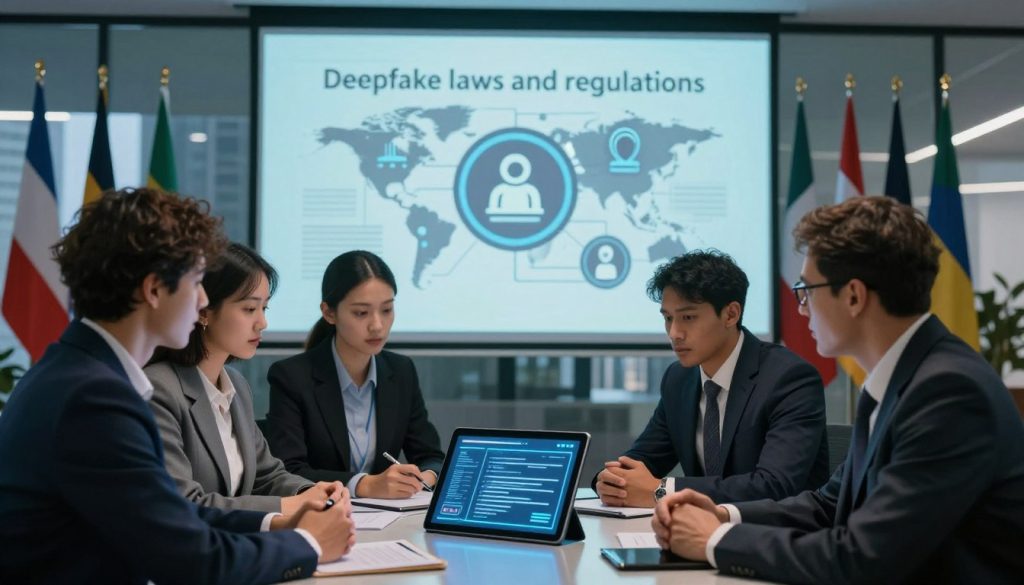
Practical steps for readers: know your state’s reporting options, preserve evidence, and use platform reporting tools quickly. Legal protections help, but basic documentation and prompt reporting matter most to limit spread.
Next: practical personal and business defenses that work regardless of the legal environment.
How to Protect Yourself and Your Company From Deepfakes
A few straightforward practices can make impersonation and fraud far harder for attackers. Start with simple personal habits, layer company controls, and prepare an incident plan so you can act fast if manipulated media appears.
Personal safeguards
Lock down accounts: tighten privacy settings and limit public high-quality images. Treat unknown calls and urgent messages as verification triggers.
- Call back saved contacts before acting.
- Confirm a shared detail (a nickname or code) on sensitive requests.
- Never send money after one phone call without a written confirmation.
Business controls
Use multi-channel verification and dual approvals for payments. For HR and recruiting, require identity documents and live video checks for remote onboarding.
Incident response and reputation
If a manipulated clip spreads, capture timestamps and URLs, notify legal/PR/security, and contact platforms for takedowns.
Communicate clearly: publish one updated statement, share supporting verification when possible, and keep public messaging factual to protect reputation.
| Area | Immediate Step | Follow-up |
|---|---|---|
| Executive request | Call known number | Require written approval and finance hold |
| Vendor change | Verify via vendor portal | Dual approval and bank confirmation |
| Viral manipulation | Archive evidence | Legal review and public FAQ page |
Remember: the goal is not perfect detection. Build methods and habits that make scams slow and costly for attackers, and you protect people and company systems effectively.
Conclusion
As synthetic visuals and voices get more convincing, our habits for checking sources must keep pace.
Recap: deepfakes appear as altered video, cloned audio, and AI images that challenge “seeing is believing.” Deepfake technology relies on data, training time, and model design—those factors drive realism and common failure points.
Major risks include disinformation, the liar’s dividend, scams, nonconsensual content, and threats to high‑stakes fields like healthcare. Practical defenses are simple: verify context, confirm provenance, follow verification playbooks, and think before you share.
Detection tools and deepfake detection systems help triage risk, but use them as one layer in a broader process. Strong media literacy, clear policies, and repeated verification habits remain the most reliable path to resilience.
FAQ
What is a deepfake and how does the technology work?
A deepfake is synthetic media—usually video or audio—created with machine learning. Techniques like autoencoders and generative adversarial networks (GANs) train models on real images, voice samples, or video to produce realistic face swaps, reenactments, or voice clones. The models learn patterns in lighting, facial motion, and sound to generate content that can be hard to distinguish from genuine recordings.
Why should I care about manipulated videos and audio today?
Seeing is no longer always believing. High-quality synthetic media can spread quickly on social media, influence public opinion, and enable fraud. When falsified content appears in news feeds or messaging apps, it can damage reputations, affect elections, and harm businesses through scams or falsified evidence.
How did this technology evolve so fast?
Early video manipulation used simple editing. The mid-2010s introduction of GANs and improved deep learning models dramatically increased realism and lowered the barrier to entry. Open-source tools and community sharing accelerated adoption—first on forums like Reddit and then across hobbyist and commercial tools.
What common types of synthetic media should I watch for?
Expect face-replacement videos, audio voice cloning from short samples, AI-generated images, and entire synthetic identities. Videos and voice files are the most convincing and dangerous because they combine visual and auditory cues to persuade viewers.
Where do manipulated videos usually appear online?
These videos often surface on social media platforms, messaging apps, and video sites. Viral sharing increases exposure, and emotional or negative content tends to get reshared more, boosting false content through the illusory truth effect.
Are there any legitimate uses for this technology?
Yes. Creators use synthetic media for parody, VFX in film production, historical reconstructions, and educational demos. Studios also use it for de-aging actors or completing scenes in post-production when done ethically and transparently.
What threats do manipulated media pose to politics and public trust?
Bad actors can produce convincing falsified speeches or events to sway voters, spread disinformation, or create denial of real evidence—the so-called “liar’s dividend.” Experts warn this can erode trust in institutions and democratic processes.
How do scammers use this technology against businesses and individuals?
Scams include CEO impersonation to authorize fraudulent wire transfers, banking and identity-verification attacks, and social-engineering calls using cloned voices. Targeted campaigns often exploit urgency and leverage real-world context to pressure victims.
Why is voice cloning so convincing and hard for people to detect?
Humans rely on familiarity and emotional cues, and modern voice synthesis captures timbre, cadence, and inflection from short samples. Research shows people struggle to detect subtle manipulations, which makes family emergency scams and impersonation calls effective.
What are the harms of nonconsensual sexual content and reputation attacks?
Nonconsensual explicit videos and images can cause long-term reputational damage, harassment, and psychological harm. Victims face difficulties removing content and restoring trust, especially when manipulated material spreads rapidly online.
Could manipulated medical images threaten healthcare?
Yes. Altered scans or fabricated clinical videos can undermine diagnostic trust and patient safety. In high-stakes domains, even small manipulations may lead to misdiagnosis or harmful treatment decisions.
How can I spot fake video, image, or audio content?
Look for visual tells like inconsistent blinking, mismatched lip-sync, unnatural lighting, facial warping, or temporal flicker. Check motion and body inconsistencies and verify provenance: source credibility, metadata, and whether the clip seems “too perfect.”
What tools exist to detect manipulated media?
Detection tools analyze artifacts, compression fingerprints, and model-induced patterns. Solutions include forensic software, content authentication and watermarking, and provenance systems. Note that detection is an arms race—models improve as detectors do.
How are platforms and companies responding to this risk?
Social networks use labeling, removal policies, and special election-related rules. Businesses build verification playbooks for finance and HR, implement employee awareness training, and adopt technical controls to reduce fraud risk.
What legal protections exist in the U.S. and internationally?
State laws increasingly target nonconsensual explicit content and election-related manipulation. Regulation varies widely, and schools and K–12 policies often lag behind technology. Global regulators emphasize transparency, reporting, and risk assessments for synthetic media.
How can I protect myself and my organization from manipulated content?
Personal safeguards include stronger account controls, verifying unexpected requests via multiple channels, and skepticism toward urgent calls. Companies should require multi-step approvals for payments, use voice and video verification best practices, run tabletop exercises, and prepare incident response and communications plans.
What should I do if a manipulated video or audio of me starts spreading?
Act quickly: document the content, request takedowns from platforms, notify legal and PR teams, and use forensic services to trace origins. Communicate transparently with stakeholders and consider law enforcement if fraud or threats appear.
Where can I learn more about detection and prevention tools?
Follow resources from research groups, industry vendors, and organizations like the Partnership on AI or the Center for AI and Digital Policy. Look for up-to-date tools that offer artifact scanning, watermark verification, and provenance tracking to stay current as techniques evolve.