

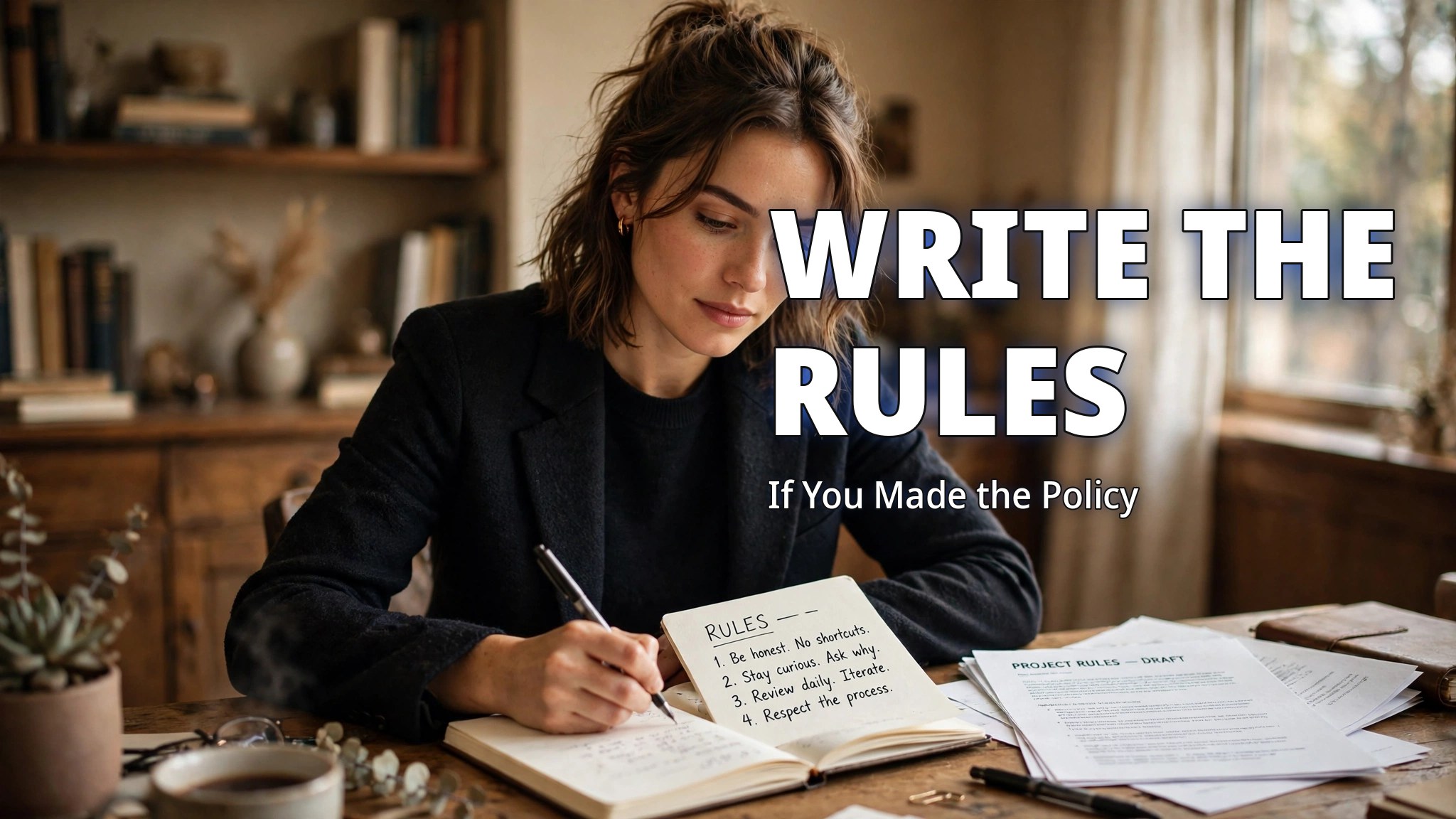
Imagine the site hands you the pen. No committee, no angry thread, no rule written after something already went wrong. You get to write the policy for AI deepfakes and face swaps, and everyone who uses the tools has to live by what you write. What would your rules say? This guide takes that question seriously, because the rules you would write tell you what you actually believe, and what you believe should show up in what you make, what you refuse, and what you post. Everything here is built from public rules you can read for yourself and from general principles that hold up anywhere, not from invented cases or borrowed legal conclusions.
Szybki werdykt: Write five short rules and live by them: only your own photos or fictional adults, consent in writing before any real face is used, adults only, label AI work as AI, and read the rules of every place you post before you post. Five rules, jedna strona, no exceptions for yourself.
Contents:
- Rule one: only your own face, lub fikcyjny
- Rule two: consent means yes, written down, before you start
- Rule three: adults only, no exceptions
- Rule four: label it AI, every time
- Rule five: read the rules where you post
- What to do when someone asks you to break a rule
- Review your rules once a year, and rewrite them in public
- What following your own rules actually costs
- Safety and the law: the limits of this guide
- Ostateczny werdykt
- FAQ
| Your rule | What it forbids | How you check it |
|---|---|---|
| Only your own photos or fictional adults | Real people who never agreed | Ask: whose face is this, and did they say yes |
| Consent in writing, before you start | Assumed or remembered permission | Keep the message or the note |
| Adults only | Anyone under 18, in any form | If you cannot verify the age, do not make it |
| Label AI work as AI | Passing a fake off as real | Say so in the post itself, not in small print |
| Read the rules where you post | Posting blind into a ban | Read the posted rules first, every time |
1. Rule one: only your own face, lub fikcyjny
The first rule is the foundation, and it is the shortest: use your own photos, or use a fictional adult character you created. Everything else in this guide hangs off that sentence. A face swap is a powerful tool precisely because a face carries identity, and identity belongs to the person in the photo. When you swap a real person’s face onto another body, you are borrowing their identity for a purpose they never chose. That is why the rule has to be first, and why it has to be absolute.
Fictional adults are the safe ground. A character you invented, with a face the generator made up, harms nobody, because nobody real is in the picture. Your own face is safe ground too: it is yours to use. The line between the two is simple to test. Ask, whose face is this, and would that person recognise themselves? If the answer is a real person who is not you, stop and go to rule two. If you cannot answer the question at all, that is also a stop.
2. Rule two: consent means yes, written down, before you start
Consent is not a feeling, and it is not a memory of a conversation that went well. It is a clear yes, given before you start, for the specific thing you are about to make. A yes to one photo is not a yes to every photo. A yes to a private joke is not a yes to a public post. A yes given last year is not a yes forever. If your rule says consent, it has to say what consent looks like, or it says nothing at all.
Write it down. Keep the message, the email, or the note where the person said yes, what they said yes to, and when they said it. A written record protects both of you: it protects them, because the limits are clear, and it protects you, because you can show what was agreed. If you cannot point to the yes, you do not have it, and the honest move is to use a fictional face instead. The Zamiana twarzy na zdjęciu AI tool works just as well on a character you invented, and nobody has to trust your memory.
3. Rule three: adults only, no exceptions
The third rule needs no nuance: adults only, in every image, in every video, in every edit, without exception. That means the person in the photo is an adult, the character you invented is an adult, and the content is made for adults. If there is any doubt about age, the answer is no. “Probably an adult” is not an adult. “Looks old enough” is not a check. A rule with exceptions is not a rule; it is a suggestion, and suggestions do not protect anyone.
This rule also covers the input, not just the result. A photo of a younger person fed into an undress or face swap tool is already a violation of the rule, even if you never share the result. The generation itself is the act. Keep your inputs adult, keep your outputs adult, and keep anything uncertain out of the tool entirely. If a photo makes you hesitate for even a second, delete it from the queue and move on.
4. Rule four: label it AI, every time
The fourth rule is about honesty to the viewer: say it is AI, in the post itself, where anyone can see it. Not in small print, not in a hashtag nobody reads, not three clicks away. A deepfake or a face swap is a fake by definition, and the only thing standing between a fake and a lie is the label. When you label it, you are telling the viewer the truth about what they are looking at, and you are giving them the chance to judge it fairly.
Labelling also protects your own work. A labelled fake is a piece of craft; an unlabelled fake is a deception waiting to be found out, and being found out costs more than any views the deception earned. Make the label part of the work, not an afterthought: one plain line, in the caption, every time. If a platform has its own labelling tool, use that too, but never let the platform’s label replace your own words.
5. Rule five: read the rules where you post
The fifth rule is the one people skip, because it feels like homework: read the rules of every place you post, before you post, every time. Platforms publish their rules openly, and those rules are the actual law of the place where your work will live. They change, and they change without telling you personally, so a rule you read last year may not be the rule today. Reading them is not optional, i “I did not know” is not a defence that works twice.
Reading the rules also tells you where your work belongs. Some places welcome adult AI content with clear labels. Some allow it only in certain areas. Some ban it entirely. Knowing which is which saves you from takedowns, strikes, and lost accounts, and it saves the community from content it did not ask for. Keep a short note for each place you post: what it allows, what it bans, and when you last checked. Update the note when the rules change.

6. What to do when someone asks you to break a rule
Sooner or later, someone will ask you to make something your rules forbid: a real person who never agreed, a face you cannot verify, a post without a label. The request will often come with pressure, a deadline, or money. Your rules are only real if they hold at that moment, so decide now what you will say. A short, plain no is enough. You do not owe a debate, and you do not owe a replacement idea. “I do not make that” is a complete sentence.
If the person is someone you know, say so kindly and say it once. If they push, repeat the same sentence, and then stop answering that request. Do not explain your rules in a way that invites negotiation, and do not make one exception to be polite, because one exception teaches everyone that your rules have a price. The people worth working with will respect a clear boundary. The ones who do not were never going to respect the person in the photo either.
7. Review your rules once a year, and rewrite them in public
Rules go stale. Tools change, platforms change their policies, and what felt careful two years ago can look careless today. So put a date on your rules and review them once a year: read them out loud, check them against the platforms’ current posted rules, and ask whether you have actually lived by them. If you broke one, write down what happened and what you will do differently. A rule you never review is a rule you stopped believing in.
When you change a rule, say so openly, in the same place where people see your work. A quiet change looks like a cover-up; a public change looks like growth. Keep the old version next to the new one, with the date, so anyone can see what changed and why. That record is the best proof that your rules are real: not that they never changed, but that every change was deliberate, dated, and visible.
What following your own rules actually costs
Ceny sprawdzone 13 lis 2026. Following your own rules costs nothing in credits: reading a platform’s posted rules is free, writing five rules on one page is free, and saying no to a request you will not take is free. What costs credits is the generation itself. On this platform, a face swap with Face Swap Pro costs 26 kredyty, an undress run costs 21 kredyty, a template image takes 49 kredyty, and a text-to-image run takes 49 kredyty. A video template costs 351 credits for five seconds and 561 credits for eight seconds.
Credit packs cost $19.99 dla 1,000 credits and $59.99 dla 5,000 kredyty, both one-time payments with credits arriving at once. The annual packs cost $119.88 i $359.88, paid once, with credits issued each month for twelve months. At the $19.99 pakiet, one credit costs about two cents, so a face swap costs about 52 cents and a template image costs about 98 cents. The site offers one free image preview per IP with no sign-up, which is enough to try the tool, but it does not change the rules: a free preview of a forbidden image is still forbidden. Rules are not priced per credit. They cost nothing to keep, and breaking one can cost an account, a reputation, or far more.
Safety and the law: the limits of this guide
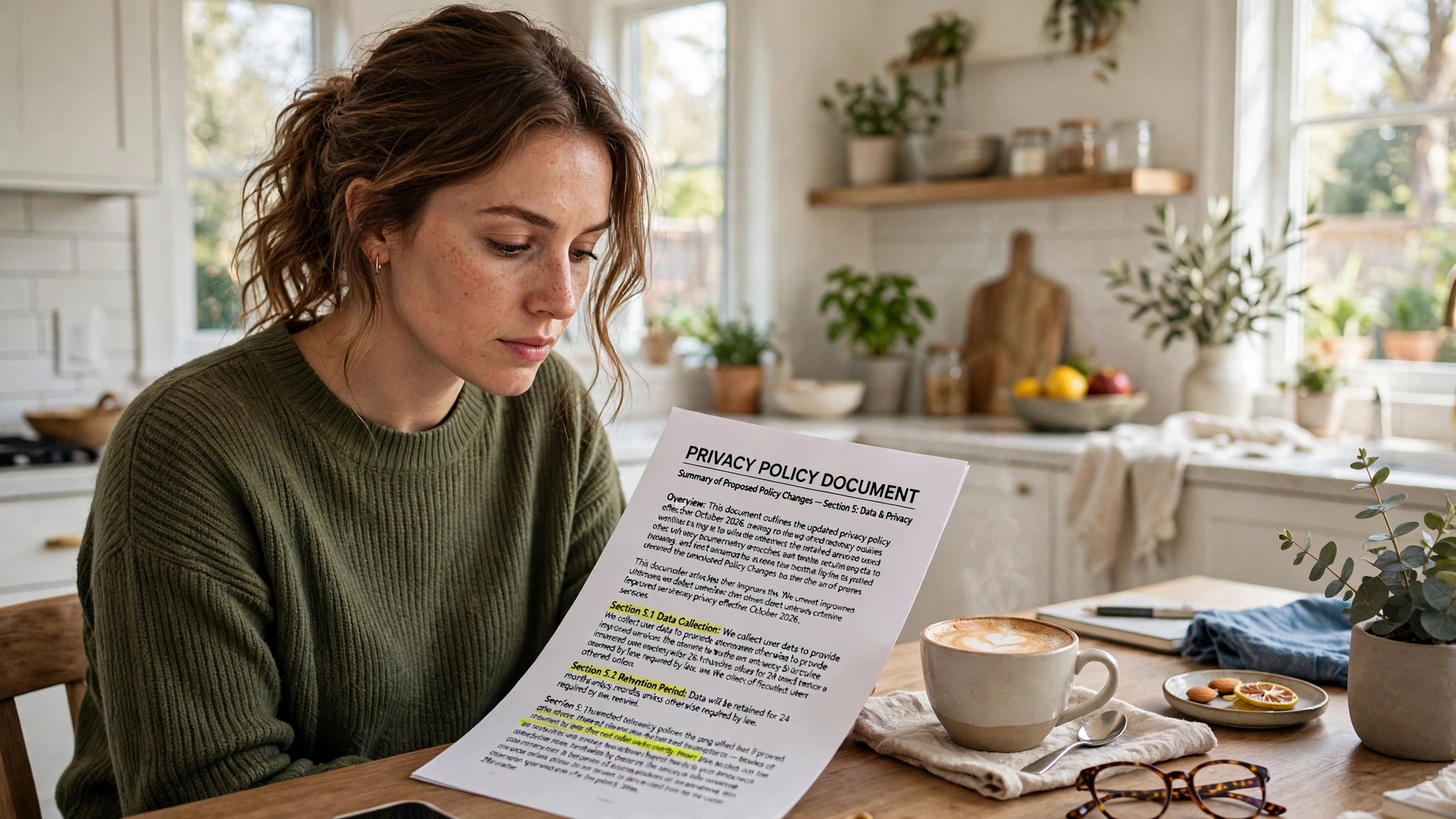
This guide states general principles and points you to public rules you can read yourself. It is not legal advice, and it does not state what the law says in any particular place. Laws about deepfakes, consent, and adult content differ by country and change over time, so if you need a legal answer, ask a lawyer in your own jurisdiction. What this guide can promise is simpler: if you only use your own photos or fictional adults, get consent in writing, keep everything adult, label your AI work, and read the rules where you post, you will be inside the principles that every serious platform and every serious creator already follows. Never make or share an image of a real person without their agreement, and never involve anyone under 18.
Ostateczny werdykt
If you made the policy, it would say five things: your own photos or fictional adults, consent in writing before you start, adults only, label it AI every time, and read the rules where you post. Write them on one page, date the page, and live by it, especially when someone asks you to make an exception. The rules are not there to limit your creativity. They are there to make sure the person in the picture, and the person looking at it, are both treated fairly. That is a policy worth signing your name to.
FAQ
What are the five rules?
Only your own photos or fictional adults, consent in writing before you start, adults only, label AI work as AI, and read the rules where you post. Five rules, jedna strona, no exceptions.
What counts as consent?
A clear yes, given before you start, for the specific thing you are about to make. Keep the message or note where the person said yes, what they agreed to, and when.
Can I use a photo of a real person if they are a public figure?
Nie. A public figure is still a real person, and this guide only covers your own photos or fictional adults. Use a character you invented instead.
Do I have to label AI images?
Tak, in the post itself, where anyone can see it. A deepfake is a fake by definition, and the label is what keeps it from becoming a lie.
Is this guide legal advice?
Nie. It states general principles and points to public rules you can read yourself. Laws differ by country and change over time, so ask a lawyer for a legal answer.
What do I say when someone asks me to break a rule?
Say no, plainly and once: I do not make that. You do not owe a debate, and one exception teaches everyone that your rules have a price.
Czytaj dalej: The Request You Turned Down: When Someone Asks You to Make a Deepfake and You Say No (2026) · Is Last Year’s Advice Still Legal? How to Re-Check Old Deepfake Guidance (2026) · How One Platform Rule Changed: A Short History of Adult-Content Policy Updates (2026)